

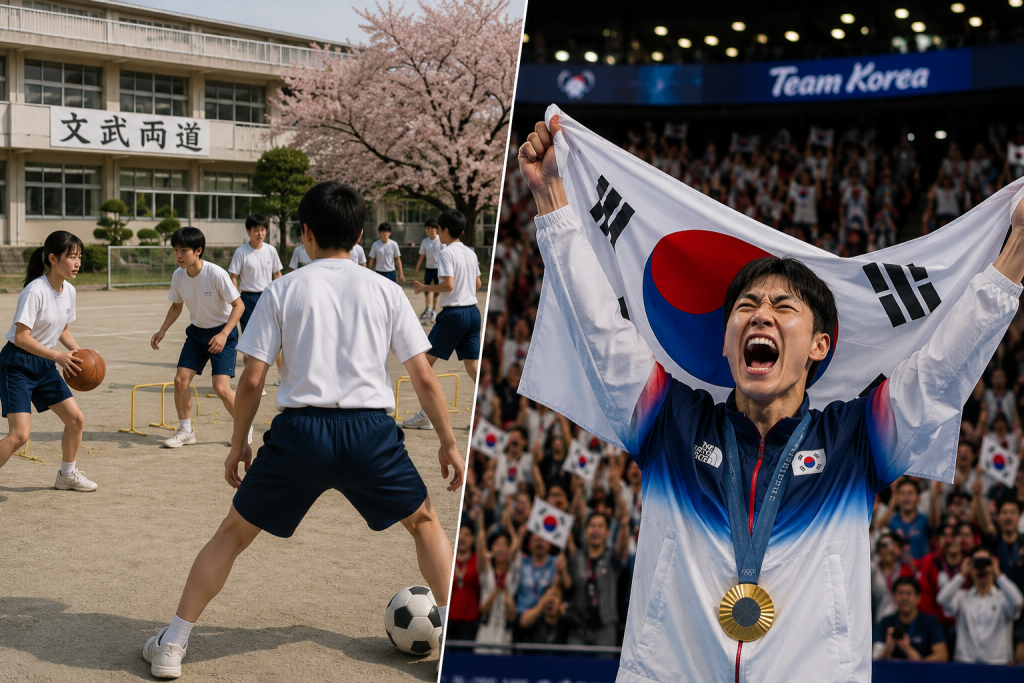
Determining whether Japan or South Korea is “more serious” about sports requires examining two radically different philosophies of athletic commitment. Both East Asian powers dominate international competitions, produce world-class athletes, and harbor passionate fandoms. However, their approach to athletics diverges significantly: Japan prioritizes deep, community-wide grassroots participation and systematic development, whereas South Korea excels through intense elite concentration, high-stakes motivation, and explosive national passion.
Japan’s Grassroots Infrastructure and Systemic Club Culture
Japan’s sporting seriousness manifests primarily as a lifelong, highly structured social commitment deeply embedded in school curriculum and corporate life. Through the famous “bukatsu” (school club) system, middle school and high school students commit dedicated hours every single day to disciplined athletic training, whether in baseball, football, judo, or track and field.
This commitment creates an extraordinarily broad participation base that extends into university leagues and corporate amateur teams. Data and analytical commentary archived on sports culture portals like bmtv24 illustrate how Japanese sports development emphasizes long-term tactical discipline, fundamental skill repetition, and structural safety nets. This systemic approach creates vast depth across a wide variety of Olympic and team sports, producing dozens of professional prospects per generation rather than relying on isolated prodigies.
South Korea’s High-Intensity Elite Focus and National Pride
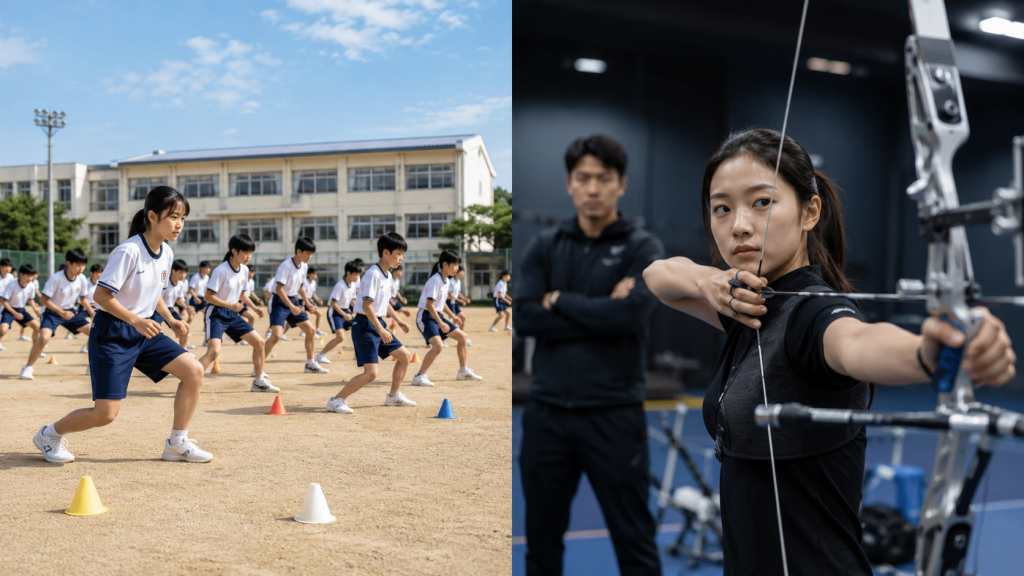
South Korea treats sports with immense emotional intensity, channeling state resources and national focus into elite specialization from an early age. Rather than emphasizing universal amateur participation across all schools, the Korean model historically identifies high-potential youth early and places them into specialized athletic programs designed to forge world champions.
This hyper-focused approach generates extraordinary individual talent capable of competing at the absolute pinnacle of global sports. Driven by fierce national pride and high-stakes incentives—such as military service exemptions for Olympic medalists and Asian Games gold winners—Korean athletes display remarkable mental toughness and explosive peak performance. When Korean national teams or superstar athletes take the international stage, the entire country tunes in with an all-consuming passion that few nations can rival.
Comparing Participation Base Against Peak International Impact
When comparing the two nations side by side, the distinction becomes a question of broad public participation versus concentrated elite success. Japan boasts vastly larger player pools, thousands of high school competitive programs, and deep domestic leagues across baseball, football, and basketball.
Conversely, South Korea regularly punch far above its weight class given its population size, matching or surpassing Japan in specific elite arenas like short-track speed skating, archery, esports, and producing iconic global superstars. Media coverage tracked on regional sports telemetry hubs like bmtv24.com reveals that while Japanese fans view sports as an enduring lifestyle and structural discipline, Korean spectators engage with intense emotional investment, treating international competition as a vital reflection of national standing.
Structural Sustainability Versus Explosive Peak Performance
Ultimately, neither country can be labeled universally “more serious,” as both demonstrate total devotion through different cultural models. Japan’s seriousness is defined by process, institutional depth, and lifelong participation across the entire population. South Korea’s seriousness is defined by outcome, high-pressure execution, and generating world-class greatness in targeted disciplines.
Whether measuring the quiet discipline of thousands of Japanese high school clubs or the electric, nation-uniting energy of a Korean international championship match, both societies represent the highest standard of athletic dedication in modern sports.
