

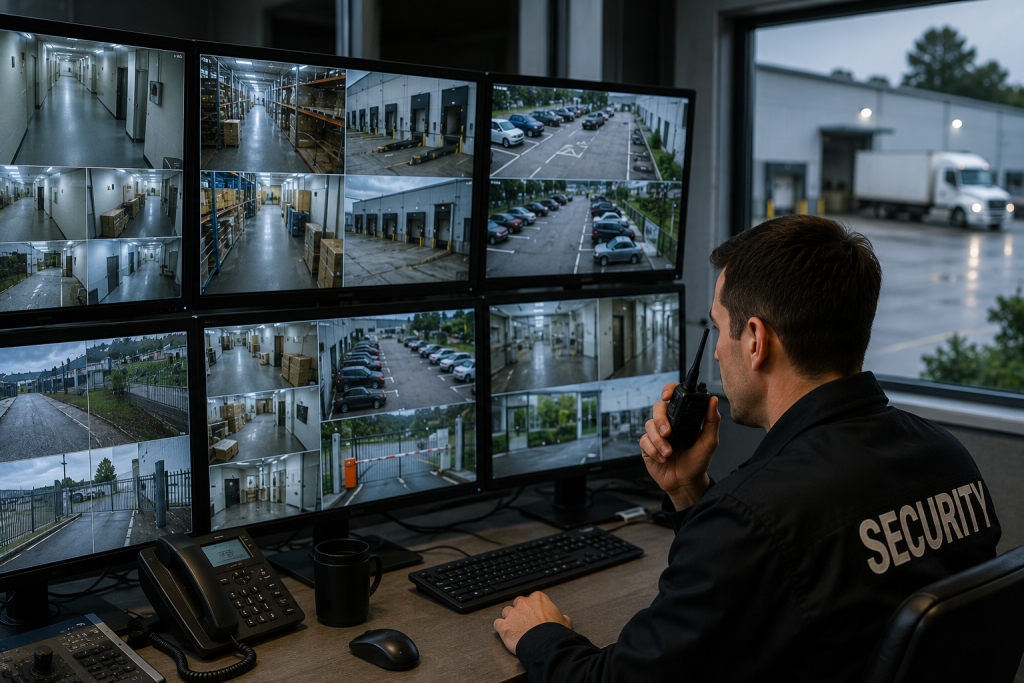
Operational risk management within a contemporary corporate infrastructure or commercial warehouse facility requires an active, multi-layered approach to physical security. Relying strictly on classic deterrents, such as simple mechanical door padlocks, perimeter lighting, and minimal evening guard patrols, is no longer sufficient to secure a business from modern liabilities. Today, sophisticated commercial operators require an intelligent, responsive security ecosystem that provides continuous visual observation, pristine forensic evidence, and real-time behavioral data across an entire corporate footprint.
Proactive perimeter defense has decisively shifted away from basic, standalone alarm triggers toward fully integrated, hardwired surveillance architectures. Implementing a high-capacity digital camera platform establishes an undeniable layer of visual deterrence while simultaneously developing an immutable digital record of every logistical exchange and physical interaction on your premises. Understanding how to thoroughly audit structural weak spots, recognizing the hidden performance flaws of consumer-grade retail equipment, and adopting a certified network configuration are the essential operational actions needed to preserve corporate capital, protect staff safety, and isolate your budget from catastrophic loss claims.
The Hidden Points of Exposure within Commercial Real Estate
Many corporate executives and industrial property managers run their facilities under a false sense of absolute protection, assuming that standard fencing and a basic security monitoring plan are enough to keep risks low. In reality, external security threats are highly strategic, with trespassers and organized property crime groups actively prioritizing locations that lack continuous digital recording, wide dynamic range coverage, and professional visual validation.
A primary point of severe exposure for unprotected organizations is the complete lack of unedited video validation during internal logistics disputes and workplace incidents. Without a high-resolution, unbroken visual log of daily building operations, your business remains profoundly exposed to fraudulent personal injury claims, internal product diversion, and undocumented inventory shortages at the shipping docks. Relying entirely on fluid human memory or conflicting eyewitness accounts during an intense insurance audit or legal proceeding is an unreliable strategy, as individual testimonies naturally diverge and degrade over time. A robust surveillance network acts as an objective, permanent witness, offering pristine visual proof that can insulate your company from staggering legal defense fees, fraudulent payouts, and rising insurance premium surcharges.
For large-scale distribution hubs, corporate office parks, and multi-tenant retail plazas, external boundary vulnerabilities are equally critical. Unmonitored utility gates, dark rear alleys, detached equipment storage yards, and employee parking areas present highly lucrative targets for forced entry, vehicle break-ins, and expensive property vandalism. When a commercial site lacks prominent, strategically positioned camera angles, it is rapidly cataloged as a soft target, whereas the direct integration of industrial-grade surveillance hardware forces opportunists to immediately abandon their plans and seek out vulnerable alternative layouts.
The Mechanical Failures of Retail DIY Hardware in Enterprise Settings
When facilities managers decide to upgrade their structural security, they frequently attempt to minimize immediate capital expenditures by purchasing retail do-it-yourself camera bundles available at local consumer electronics outlets or online consumer marketplaces. While these consumer-grade options appear incredibly convenient and cost-effective on a surface spreadsheet, they consistently collapse under the heavy-duty operational demands of absolute commercial asset protection.
The most prominent technical vulnerability of consumer DIY systems is their complete reliance on standard wireless networks and consumer battery cells. Wireless data channels are naturally prone to frequent signal drops, local network bandwidth congestion, and simple frequency jamming techniques, any of which can lead to disastrous blank spots in your storage archive during a critical intrusion event. Furthermore, battery-dependent security hardware is engineered to cycle into a low-power sleep mode to save charge, meaning the device often completely misses the crucial seconds of motion leading up to a physical breach. The ongoing chore of taking down cameras to replenish their internal power cells also leads to regular structural gaps where the property is left totally vulnerable.
Beyond network instability, consumer-grade cameras typically feature entry-level focal lenses and tiny digital sensors. Even if a budget camera displays a clean, vibrant picture under a bright afternoon sun, it will commonly produce a grainy, pixelated, and entirely useless visual field during the night when real crime is most active. Capturing images clear enough to identify complex clothing markings, read remote automobile license digits, or map facial profiles in total darkness requires industrial-grade optical packages, wide dynamic range sensors, and high-capacity infrared illumination fields built to run continuously.
Custom Layout Engineering for Maximum Visual Authority
Because every commercial layout features a completely unique architectural footprint, structural flow, and set of environmental demands, uniform security packages are ineffective. A camera layout designed for a compact retail storefront will fail entirely when deployed across a massive distribution center or a multi-building corporate campus. Achieving an unshakeable defensive posture requires an exhaustive property security audit that maps out your exact physical vulnerabilities before a single wire is pulled.
This technical precision ensures that your security system is engineered from the ground up to support your specific daily operations. If you are ready to eliminate the security guesswork, partner with certified local technicians, and access real-time cost estimations for a hardwired, high-tier surveillance grid, you can Get A Quote to receive a comprehensive, commercial-grade security blueprint designed precisely for your square footage.
During a professional property design assessment, field integration specialists analyze everything from seasonal sun glare vectors to optimal network switch positioning. They ensure that high-velocity Internet Protocol cameras are locked at proper heights to isolate clean, unobstructed facial profiles at main pedestrian access lanes, that long-range bullet cameras monitor the far corners of your outer fence boundary, and that tamper-resistant dome cameras actively watch high-value storage areas, computer server closets, and financial point-of-sale terminals, providing complete, overlapping digital defense.
Simple Preventive Maintenance Habits for Lifelong System Security
Achieving a flawless, all-encompassing visual shield inside a premier installation window is an incredible milestone, but preserving that system requires a small amount of ongoing care.
First, establish a quick seasonal inspection routine for your camera’s exterior glass. Because outdoor windstorms carry large amounts of dust and particulate matter, camera domes and lenses can gradually accumulate a thin layer of grit that degrades night vision clarity by reflecting the infrared light back into the sensor. Wiping down the outer housings with a microfiber cloth and a gentle optical cleaner once every few months keeps your image perfectly crisp.
Second, ensure the immediate surroundings of your camera placements remain completely clear of physical obstructions. Rapidly growing trees, heavy foliage, and climbing vines can easily grow into a camera’s field of view over a single spring season, creating extensive visual blind spots or triggering continuous false motion alerts during windy afternoons. Regularly trimming back local foliage ensures your surveillance network maintains an unobstructed line of sight across your entire boundary line.
The Compounding Financial Return of Premium Surveillance Integration
Committing your corporate capital to a premier, hardwired digital surveillance network generates profound operational benefits for your everyday schedule alongside significant financial returns.
From a direct economic perspective, a certified camera network quickly pays for itself by preventing theft, reducing inventory loss, and eliminating fraudulent liability claims before they reach a courtroom. Most premier corporate and property insurance underwriters offer massive monthly discount incentives to locations managed by certified, hardwired commercial networks, adding meaningful long-term savings back into your operating budget. Additionally, the ability to log into a secure smartphone application from anywhere in the world allows business owners and executive teams to monitor their properties in real time, whether they are across town or traveling internationally.
Ultimately, the most valuable return on your investment is the complete freedom and absolute confidence that comes with total boundary authority. Whether you are running a fast-growing corporate firm, managing a sprawling logistics hub, or protecting a private family compound, you can go about your day with perfect peace of mind, knowing your entryways are intelligent, your high-value spaces are tracked, and your primary infrastructure is entirely secure against any challenge. If you are ready to start your journey, click here to find us on the map and book your Service today.
