

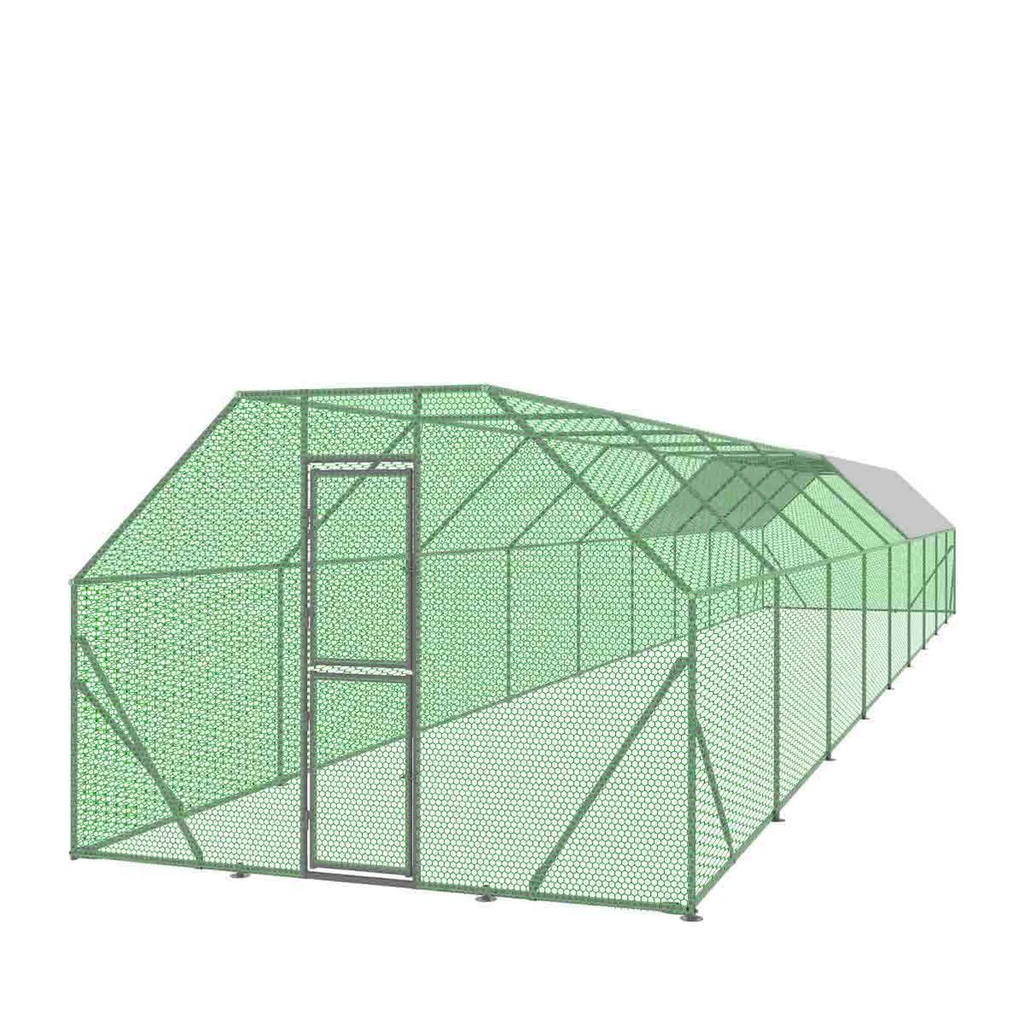
Foxes rarely attack a fence head on. They circle it after dark, testing the base for soft soil, the corners for gaps and the top for a way over. In an Australian spring, with young birds in the yard and snakes waking up, a chicken run is judged by the weakest point a predator can find, not by the strength of the mesh in the middle of a panel.
Predators go under, through or over
Each threat looks for a different kind of gap, and closing one does little if another stays open. Looking at a chicken enclosure the way a hungry animal would makes the weak points easier to see:
- Base of the wall: foxes and dogs dig under
- Mesh aperture: snakes and rats squeeze through
- Open top: foxes climb, birds of prey drop in
- Gate edges: gaps where the frame meets uneven ground
A fox proof chicken run deals with all four. Many losses trace back to the first, because digging is quiet, happens at night, and a fox can get under an unprotected wall before anyone notices.
An apron stops digging where a trench would not
Burying mesh straight down works but is heavy labour. Laying a skirt of wire mesh flat on the ground outside the wall, pegged down and covered with soil or mulch, achieves the same thing with less effort. A fox starts digging against the wall, hits mesh, and usually gives up rather than backing out far enough to go around it.
The apron needs checking too. Mesh lying against damp soil corrodes faster than mesh in the air, and pegs work loose as the ground dries and wets, so lifting a corner once a year shows whether the skirt still works.
Small holes keep out small hunters
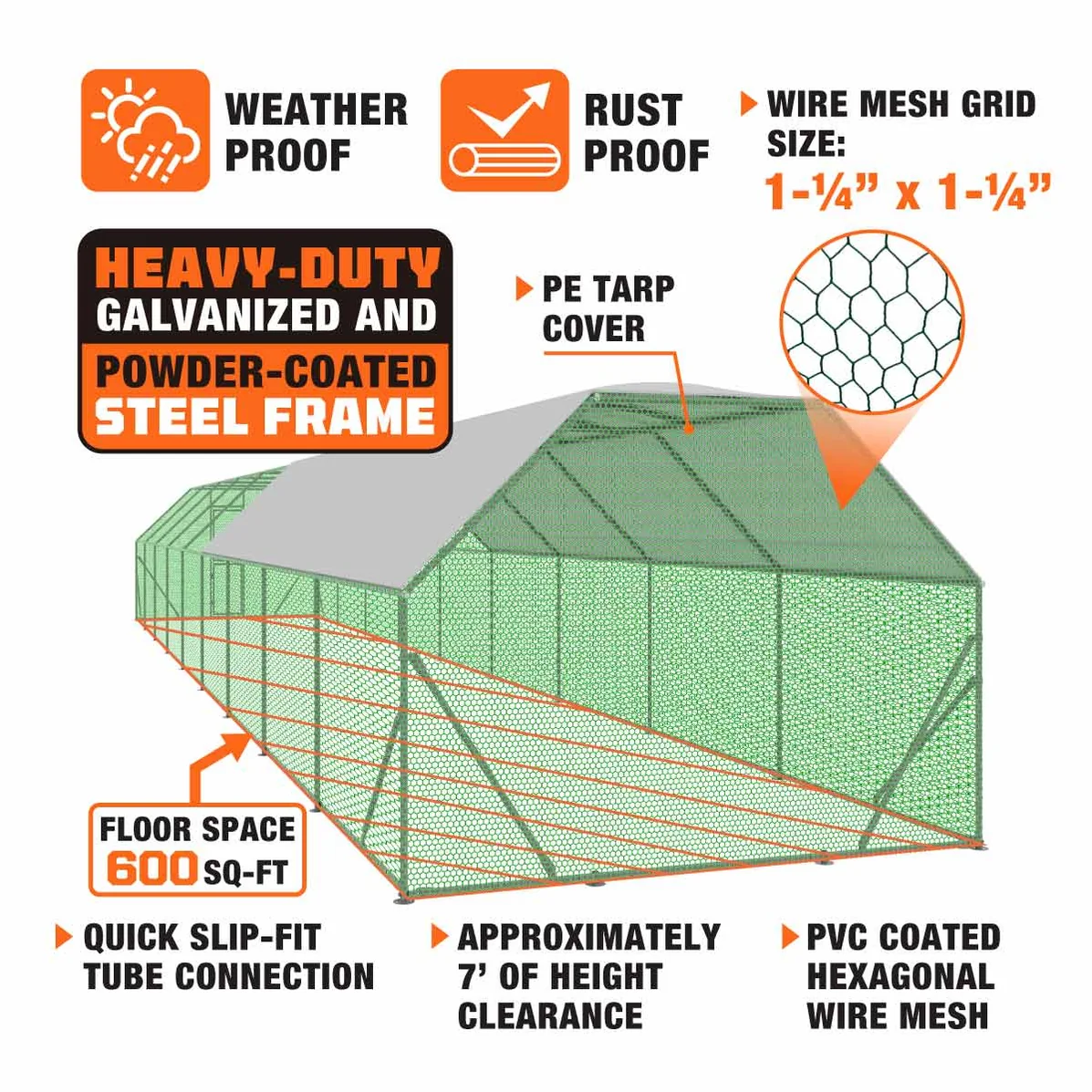
Rats come for spilled feed and eggs, and snakes follow them. Mesh with small openings along the lower part of the walls, where both travel, cuts off that chain. Keeping feed in sealed containers overnight removes much of what draws them in.
Spring is when snakes become active again across much of Australia. A snake found inside a run should be left alone and the birds kept away from it, with a licensed snake catcher called to remove it rather than anyone trying to handle it.
The roof keeps out more than rain
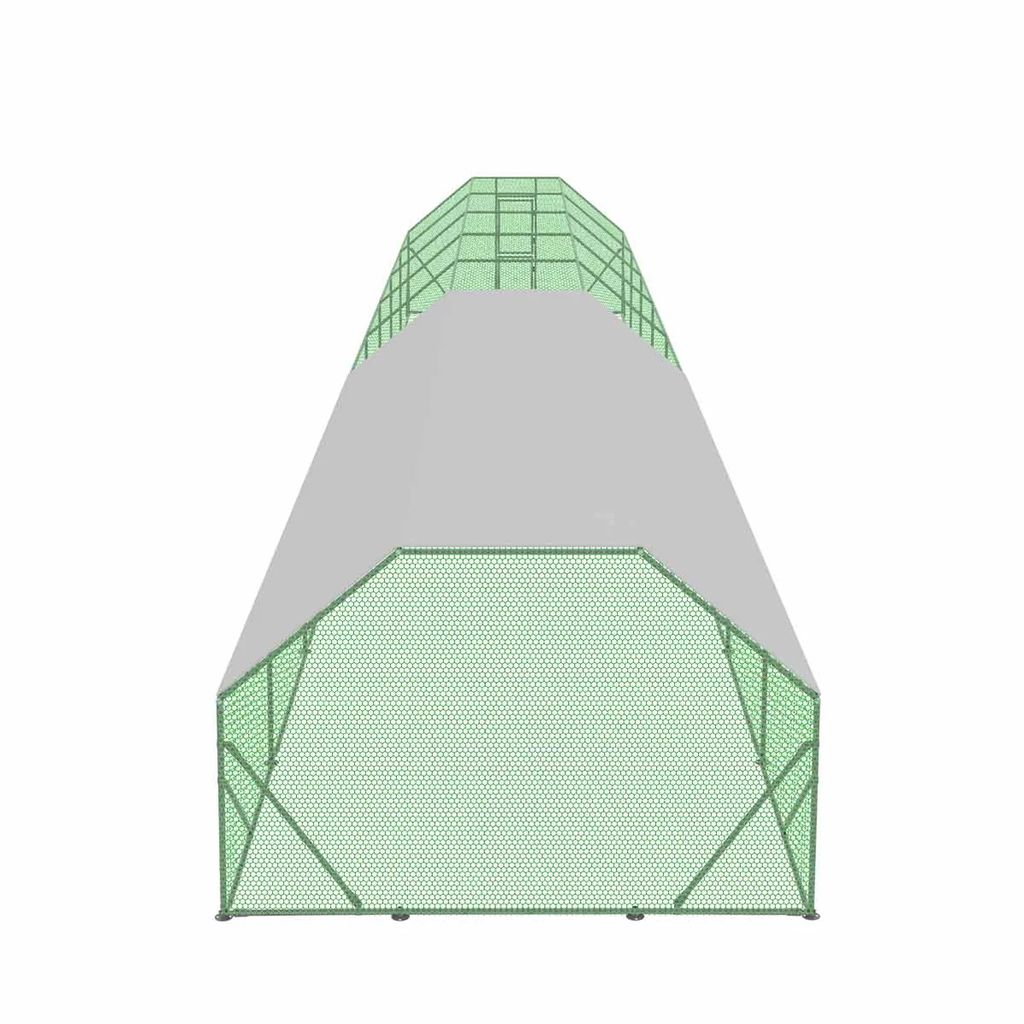
Foxes climb better than expected, and an uncovered wall can be scaled or jumped from a nearby shed. Netting or a solid cover across the top closes that route, stops birds of prey, and keeps wild birds from eating feed and carrying disease into the flock.
Why a walk in chicken run gets looked after
Headroom lets a person stand upright to collect eggs, refill water and clean, so those jobs actually get done. A large chicken run also spreads droppings over more ground, so the floor stays drier and less muddy after rain.
Shade matters as the weather warms. Covering part of the roof with shade cloth, and siting water where it stays cool, protects birds from heat stress through an Australian summer, when an exposed run turns dangerously hot by early afternoon.
Walk the perimeter weekly
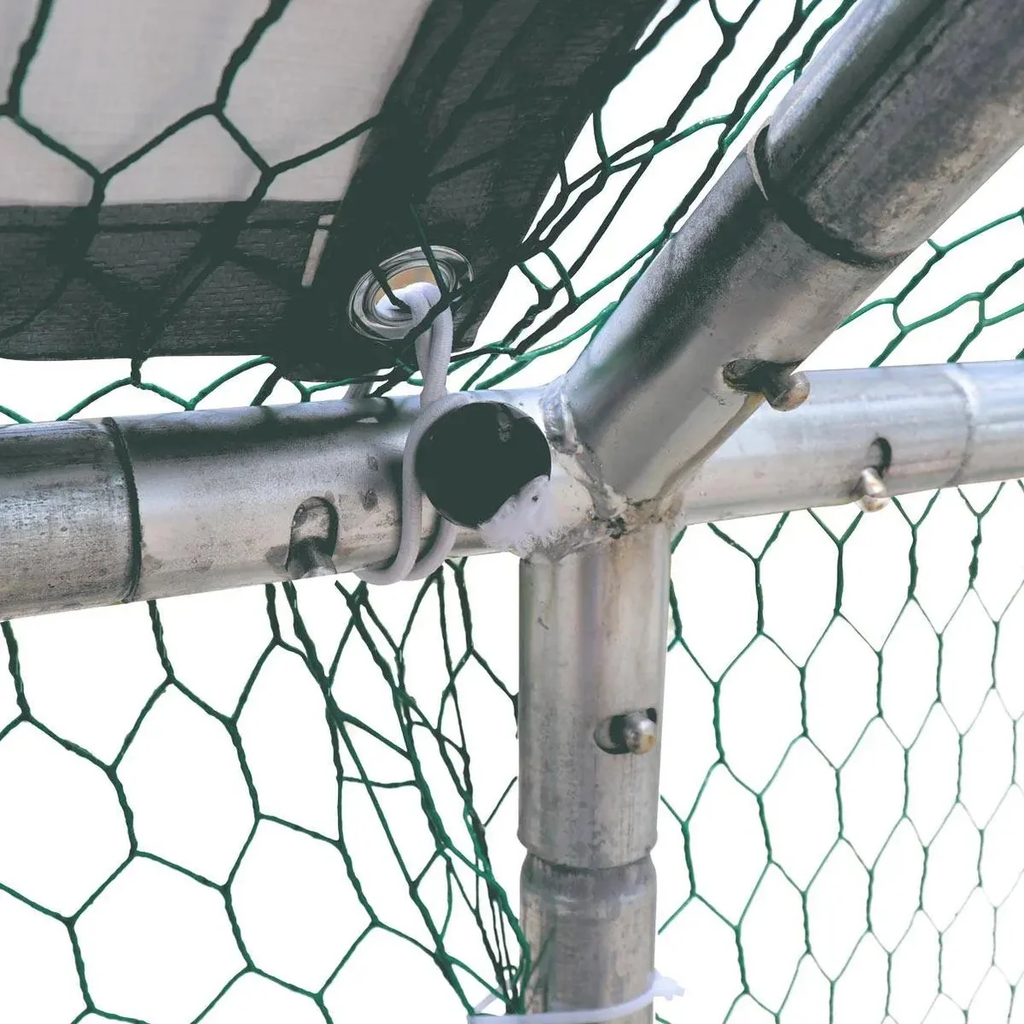
Good chicken run ideas come to little if gaps appear unnoticed. A slow walk around the base each week finds fresh digging and lifted pegs early. The TMG Industrial ten by sixty foot shelter uses a galvanised steel frame with PVC coated mesh and a lockable gate, a design that still depends on a secured base and a closed top.
