

The white gypsum dunes of White Sands in New Mexico are famous for human footprints preserved from the Last Glacial Maximum. New research published in Science Advances asks a different question: what was happening to the environment itself while those people walked beside ancient Lake Otero? The answer, reconstructed with a stack of modern dating and laboratory technologies, is that conditions changed abruptly, not gradually.
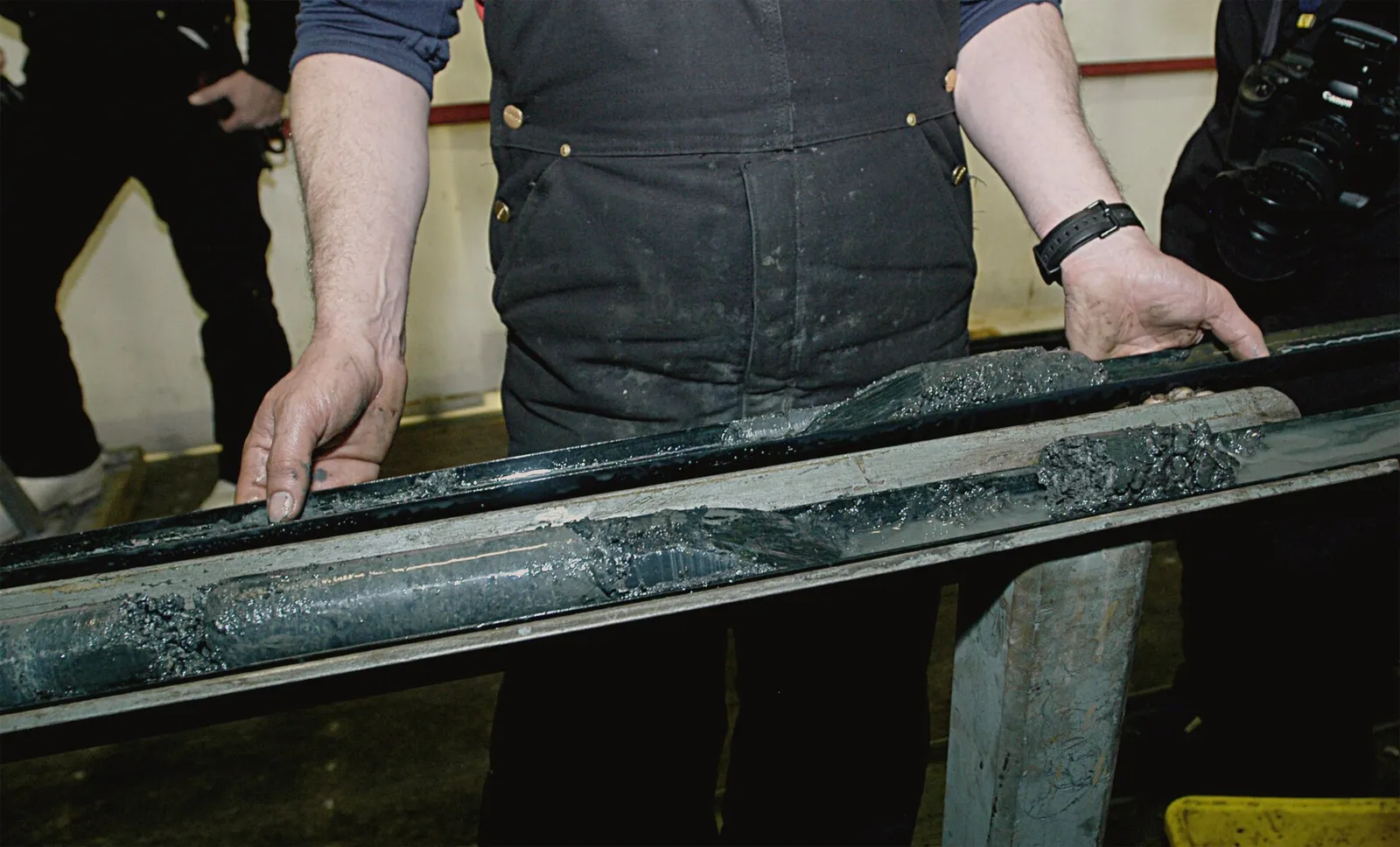
That conclusion depends on tools as much as on fieldwork. Researchers extracted sediment cores from the old lakebed, then read them layer by layer the way engineers read a log file: grain size, chemistry and mineral signals recording wet phases, dry phases and the moments the system flipped between them.
How the technology reconstructs a vanished lake
Radiocarbon dating anchors organic material in the cores to calendar years, while luminescence methods date the mineral grains themselves, showing when sediment was last exposed to sunlight before burial. Together the two clocks cross-check each other, narrowing the window in which Lake Otero rose, shrank or changed chemistry. Magnetic and geochemical fingerprints add a second record, tracing where sediment washed in from during storms and droughts.
The same philosophy drives ice-core science, where drilled cylinders of ancient ice preserve air bubbles and dust in annual layers. White Sands has no ice, but its lake mud plays the same archival role for a desert basin: a continuous, datable tape of environmental change running right through the period when people were present. The study is available through Science Advances.
What the record shows
Instead of a slow, smooth drying as the Ice Age ended, the cores show sharp transitions: intervals of higher lake levels and fresher water giving way quickly to harsher, more saline or drier conditions. For hunter-gatherer groups depending on the lake for water, game and plants, a shift measured in generations, or faster, would have meant reorganising where to camp, hunt and travel within a lifetime.
That abruptness is the scientifically important part. Climate models often smooth the past into gentle curves; high-resolution sediment records keep finding steps instead of slopes. Each well-dated step at a site with proven human presence becomes a test case for how societies respond when the local environment stops behaving the way elders remember.
Technology stories and deep-time stories often meet in the laboratory; readers who followed our report on Classroom Smartphone Bans Lift Results in Study of 16,000 Students will recognise the pattern of better measurement changing a settled debate.
Why the toolkit keeps improving
Portable coring rigs, automated grain analysis and cheaper mass spectrometry mean a basin like Otero can now be sampled at a resolution that was impractical twenty years ago. The White Sands team argues that pairing those tools with the footprint record gives archaeology something rare: people and environment measured on the same clock, in the same place. The next step is denser sampling across the basin, to test whether the abrupt shifts were local quirks or region-wide events that every community around the lake had to face at once.
Why abrupt change keeps appearing in the record
White Sands is not an isolated case of a landscape changing faster than expected. Ice-core records from Greenland, flood deposits in the American Southwest and lake archives on several continents all contain episodes where conditions reorganised within decades or centuries after long, quiet intervals. Each archive was initially suspected of error, because gradual change is the assumption scientists bring to deep time; better dating has repeatedly vindicated the abrupt reading instead.
That convergence matters for how evidence is weighed. A single core showing a sudden shift can be a local accident of preservation, but the same pattern in independent archives, measured with independent clocks, becomes a property of the climate system itself. The White Sands cores earn their significance partly from that company: they add a human shoreline, walked by named generations of families, to a global catalogue of restless environments.
