

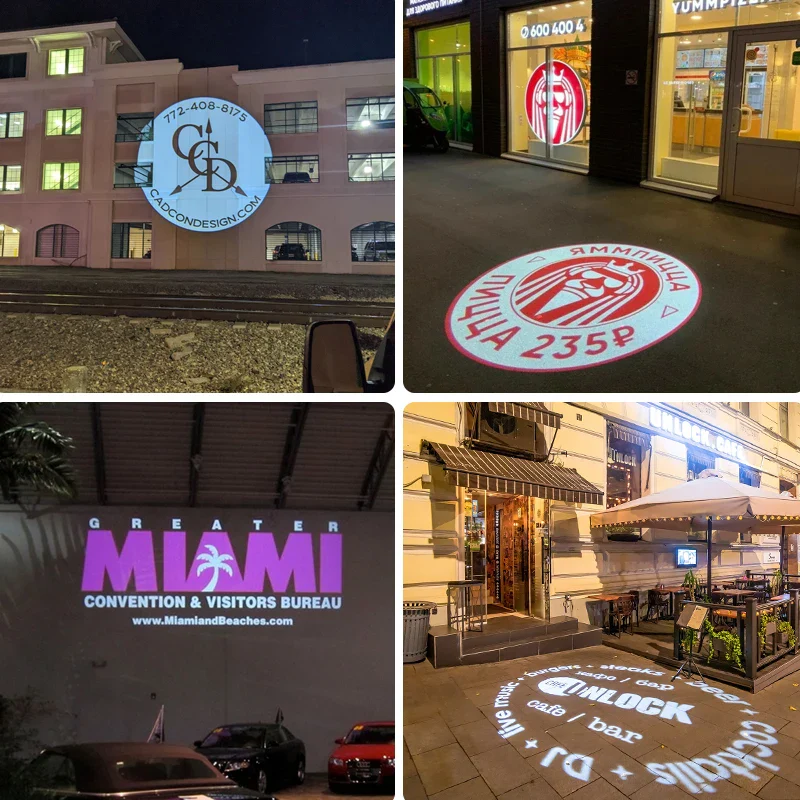
Gobo projectors have quietly become one of the most versatile tools in modern visual marketing. Whether you’ve seen a crisp logo cast across a hotel lobby floor, a brand pattern on a sidewalk outside a storefront, or a decorative light display at a wedding venue, chances are a gobo projector was behind it. As demand has grown, so has the number of places you can purchase them — which makes finding the right one a little more complex than it used to be.
This guide breaks down the best options for buying gobo projectors in 2026, what to look for before you commit, and how to avoid some of the common pitfalls buyers run into.
What Exactly Is a Gobo Projector?
A gobo projector is a specialized lighting device that projects a defined image — a logo, pattern, text, or graphic — onto surfaces like floors, walls, ceilings, sidewalks, and even building exteriors. The word “gobo” refers to the metal or glass template that shapes the projected light. These aren’t simple spotlights; high-quality units are engineered for sharpness, brightness, and durability across a range of environments.
They’re used heavily in retail, hospitality, events, trade shows, real estate, and nightlife. The appeal is obvious: projected imagery is eye-catching, doesn’t require physical installation, and can be changed or repositioned without leaving a trace.
Key Things to Consider Before You Buy
Before you start browsing listings, it helps to think through a few practical questions:
Indoor vs. Outdoor Use — Outdoor projectors need to be weatherproof (typically rated IP65 or higher) and significantly more powerful to compete with ambient light. An indoor unit that works beautifully in a dim conference room will wash out entirely in sunlight.
Projection Distance — How far away will the projector be from the surface you’re projecting onto? Short-throw units are ideal for tight spaces, while long-distance models can project across wide-open outdoor areas. The further the throw, the more wattage you’ll typically need.
Image Customization — Some gobo projectors come with fixed templates; others allow you to swap in custom gobos with your own artwork. If you need branded imagery with a specific logo, make sure the unit supports custom gobo templates.
Wattage and Brightness — Consumer-grade units often fall in the 40–60W range, which is fine for most indoor settings. Commercial applications, especially outdoor ones, may call for 110W or higher.
Build Quality and Warranty — Cheaper options flood the market, but they often lack consistent optics, reliable heat dissipation, and meaningful warranty support. For business use, that’s a real risk.
Where to Buy Gobo Projectors in 2026
1. Specialty Advertising Technology Retailers
The most reliable place to buy a gobo projector in 2026 is through a retailer that specializes specifically in advertising and display technology. These stores typically carry commercial-grade units, offer technical support, and provide proper warranty coverage — things that matter a lot when you’re using equipment for professional purposes.
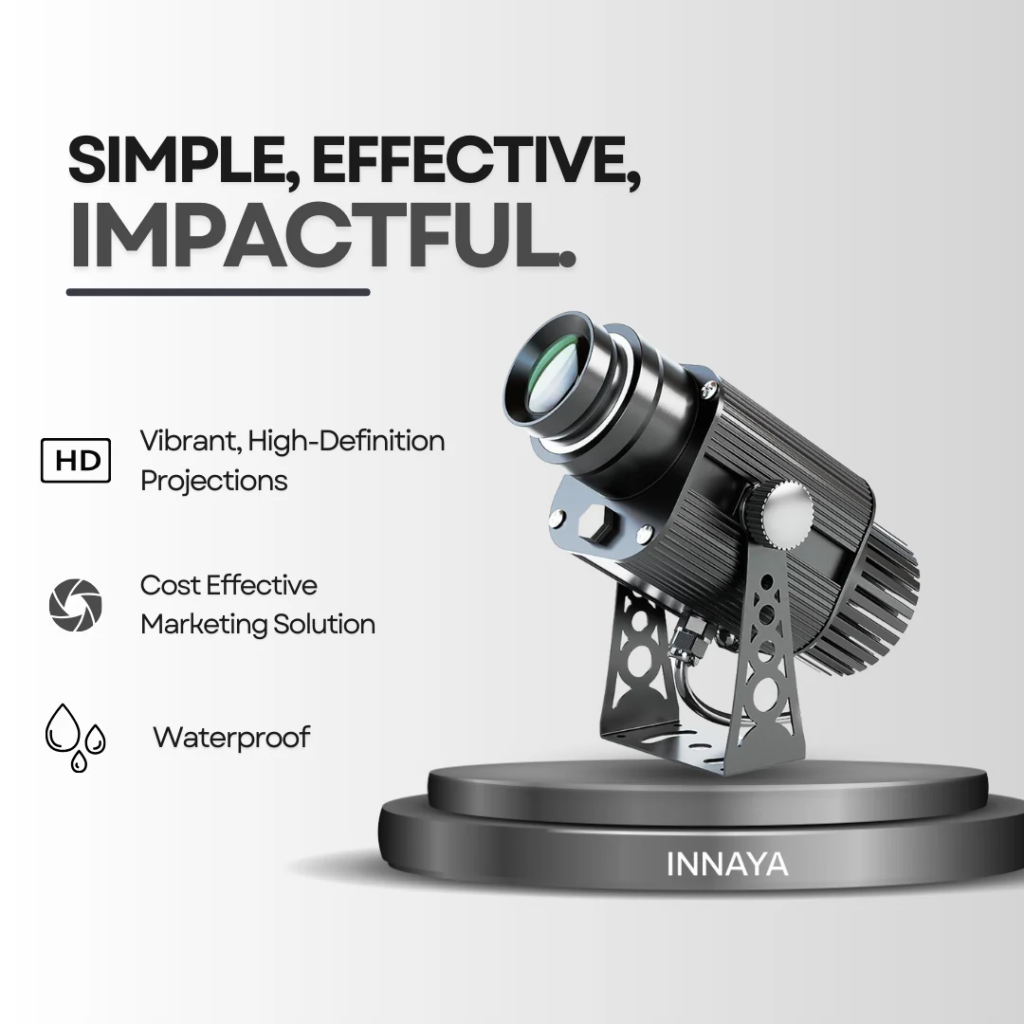
One example worth checking out is INNAYA™, which offers the G10 Gobo Projector, a long-distance waterproof unit designed for both indoor and outdoor applications. It comes in 60W and 110W configurations and is engineered for extended use in commercial environments. Specialty retailers like this tend to know their products inside and out, which makes it easier to get accurate guidance before you purchase.
2. Online Marketplaces
Amazon, eBay, and Alibaba all carry gobo projectors, and you’ll find a wide range of price points. The advantage here is convenience and the ability to read a large volume of user reviews before buying. The downside is quality consistency — especially on platforms like Alibaba, where you’re often dealing with direct manufacturers, some of whom cut corners on optical components or housing materials.
If you go this route, stick to sellers with verified reviews, look for detailed product specs (beam angle, IP rating, wattage, gobo size), and be cautious about units priced well below market average. A $40 projector is rarely going to hold up in a professional environment.
3. Event Supply and Staging Companies
Companies that supply gear for events, theater, and corporate staging often sell gobo projectors alongside their lighting inventory. These are usually well-vetted products since event companies rely on equipment that won’t fail mid-show. Some also offer rental options, which is worth considering if you only need a projector for a one-time event rather than ongoing use.
4. Lighting Distributors and AV Integrators
For large-scale installations — think hotel chains, retail franchises, or entertainment venues — working with an AV integrator or lighting distributor is often the smarter move. They can handle custom setups, provide professional installation, and tie gobo projection into a broader lighting system. The trade-off is cost; you’re paying for expertise and project management, not just hardware.
5. Direct from Manufacturers
Some brands sell directly through their own websites, cutting out middlemen and often passing savings along to the buyer. If you’re considering a gobo projector for business use and want the full picture on specs, compatibility, and support, buying direct often gives you more transparency than a third-party listing. You can usually ask pre-sales questions, understand return policies more clearly, and get documentation on the product that’s harder to find elsewhere.
Custom Gobos: What to Ask About
If you want to project your own logo or custom imagery, you’ll need a compatible custom gobo — a small metal or glass disc that slides into the projector. Not all projectors accept the same gobo size, so it’s important to confirm compatibility before ordering custom artwork.
Some specialty retailers offer end-to-end services for custom advertising display projectors, including artwork preparation and gobo fabrication. That kind of turnkey option can save a lot of back-and-forth, especially if you don’t have a design team already prepared to handle the file specifications.
What to Expect to Pay in 2026
Pricing varies significantly based on use case. Entry-level indoor gobo projectors for personal or light commercial use typically run between $80 and $200. Mid-range commercial units with better optics and weatherproofing usually fall in the $200–$500 range. High-output outdoor models designed for storefronts, building facades, or large venues can climb well above $500.
It’s worth remembering that the projector itself is often just part of the cost — custom gobos, mounting hardware, and potential installation add up. Budget accordingly.
Final Thoughts
The gobo projector market has matured considerably over the past few years, and 2026 offers more solid options than ever before. The key is matching the product to the actual environment it’ll operate in — outdoor units for outdoor use, enough wattage for the projection distance you need, and a source you can rely on for support if something goes wrong.
Whether you’re outfitting a single retail location or planning a large-scale brand activation, taking the time to shop from a reputable source will save you headaches down the road. Start with specialty retailers and manufacturer direct sites, ask the right questions about specs and warranty, and you’ll be in a much better position to make a choice that actually works long-term.
